Heading 6
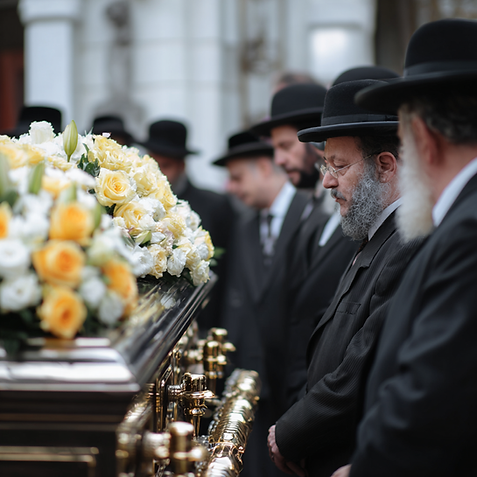
Jewish mourning practices offer a clear and compassionate structure that honours the dignity of the deceased while supporting the bereaved through carefully defined stages of grief. Many of these practices are rooted in teachings found throughout the Torah and wider Tenakh, where respect for the dead and care for the bereaved are repeatedly emphasised.
The Immediate Response: Keriah and Blessing
Tearing of clothing
Upon hearing of a death, close relatives perform keriah, the ritual tearing of clothing. This practice has biblical precedent: Jacob tears his garments upon learning of Joseph’s supposed death:

As do David and his men when Saul and Jonathan die (2 Samuel 1:11). Parents usually tear over the heart, while other relatives tear on the right side.
Blessing
A blessing acknowledging God as “the True Judge” (Baruch Dayan HaEmet) is recited. This reflects the Jewish belief in God’s ultimate justice, a theme grounded in Abraham’s declaration:

The blessing expresses acceptance of God’s authority even in moments of profound sorrow.
Aninut (Between Death and Burial)
The period known as aninut lasts from the moment of death until the burial. It is the most intense stage of mourning. During this time, close family members focus entirely on grief and on fulfilling their duty to honour the dead. The basis for prompt burial is found in the Torah:
"Be sure to bury it that same day." (Deuteronomy 21)
This gives rise to the practice of ensuring that someone stays with the body at all times until burial.
Mourners during aninut are exempt from many religious obligations so they may focus on respect for the deceased—a principle rooted in the mitzvah of kavod ha-met (honouring the dead). They refrain from grooming, bathing, cutting hair, or sexual relations, symbolic of the disruption and shock of loss. After the burial, they eat a simple meal of condolence, traditionally including bread and eggs, which symbolise continuity and the cycle of life.
Shiva (Seven Days After Burial)
Shiva begins immediately after the burial and lasts for seven days. The seven-day structure reflects biblical mourning periods, such as Jacob mourning for seven days (Genesis 50). During shiva, mourners stay at home, sit on low stools as a sign of humility, and cover mirrors to avoid focusing on personal appearance.
Family and friends visit to bring comfort, fulfilling the mitzvah of nichum aveilim - comforting the mourners - which mirrors the way the community gathered around Job to comfort him. Prayers are recited three times a day with a minyan, and the Kaddish prayer is said regularly. Although Kaddish does not mention death, it praises God’s greatness, affirming faith in God even in grief—a theme echoed in many Psalms, such as"
“The Lord is close to the brokenhearted” (Psalm 34).
Sheloshim (Thirty Days After Burial)
Sheloshim, meaning “thirty,” continues the structured return to daily life. The practice of a thirty-day mourning period has biblical roots: the Israelites mourned Moses for thirty days after his death (Deuteronomy 34:8). During this time, mourners gradually resume normal routines while refraining from celebrations, haircuts, and music. Male mourners continue reciting Kaddish daily, expressing ongoing remembrance and honour for the deceased.
Avelut (Up to Eleven Months After)
The final stage, avelut, lasts for eleven months following sheloshim, particularly when mourning a parent. The length of this period stems from rabbinic interpretation of the soul’s judgement period, but its spirit aligns with biblical themes of honouring one’s parents (Exodus 20:12) and maintaining remembrance.
At the end of avelut, many families hold a ceremony to unveil the gravestone, marking the formal completion of mourning. Visitors often place small stones on graves, a practice connected to biblical imagery of remembrance, such as Joshua setting up stones as memorials (Joshua 4:6–7).
Each year, the yahrzeit—the anniversary of death—is observed with Kaddish or a Torah blessing, echoing the Torah’s emphasis on remembering past generations.
Differences Between Orthodox and Reform Practices
Reform communities often adapt mourning practices to modern circumstances while preserving their underlying meaning. For example, shiva may be shortened to three days, and mourners may wear a torn black ribbon instead of tearing clothing. Despite variations, all branches of Judaism maintain the biblical and rabbinic principles of honouring the dead, supporting the bereaved, and moving through grief in structured stages.